Relationship Rebuild & Communication Support
Service Type(s):
- Couples Counselling
- Communication Coaching
- Conflict Resolution Support
Service(s) Delivered:
- Joint Intake Session + Individual Check-ins (as needed)
- 8-Session Couples Program
- Communication Frameworks & Take-Home Exercises
This case involves a young man in his late 20s who sought therapy due to persistent anxiety related to his professional performance and upcoming professional exams. Despite being highly intelligent and competent in his field, he experienced intense worry about failing, making mistakes, or being judged by colleagues and supervisors. This anxiety interfered with his focus, sleep, and productivity, leaving him feeling exhausted, frustrated, and demoralised.
In the initial sessions, we explored his early experiences with achievement and expectations. He described a childhood in which high performance was consistently reinforced, while mistakes were met with criticism or disappointment. Over time, he developed a belief that his value was entirely tied to success, and any perceived failure would reflect a personal flaw. This belief pattern contributed to chronic anticipatory anxiety, perfectionism, and self-doubt, particularly when facing exams, deadlines, or presentations.
The CBT approach began by identifying unhelpful thought patterns that amplified his anxiety. Common cognitive distortions included “catastrophising” (“If I fail this exam, my career is over”), “all-or-nothing thinking” (“I must perform perfectly, or I am a failure”), and “mental filtering” (focusing only on mistakes while discounting successes). We worked together to recognise these patterns and examine the evidence supporting or refuting them, helping him separate automatic anxious thoughts from reality.
Behavioural strategies and exposure exercises were integrated alongside cognitive work. He was encouraged to practice simulated exam conditions, deliver practice presentations, and tackle challenging work tasks incrementally. After each exposure, we processed his experience in therapy, highlighting successes, identifying distortions, and reinforcing balanced self-assessment. These exercises gradually reduced avoidance behaviours and increased confidence in his ability to manage performance-related stress.
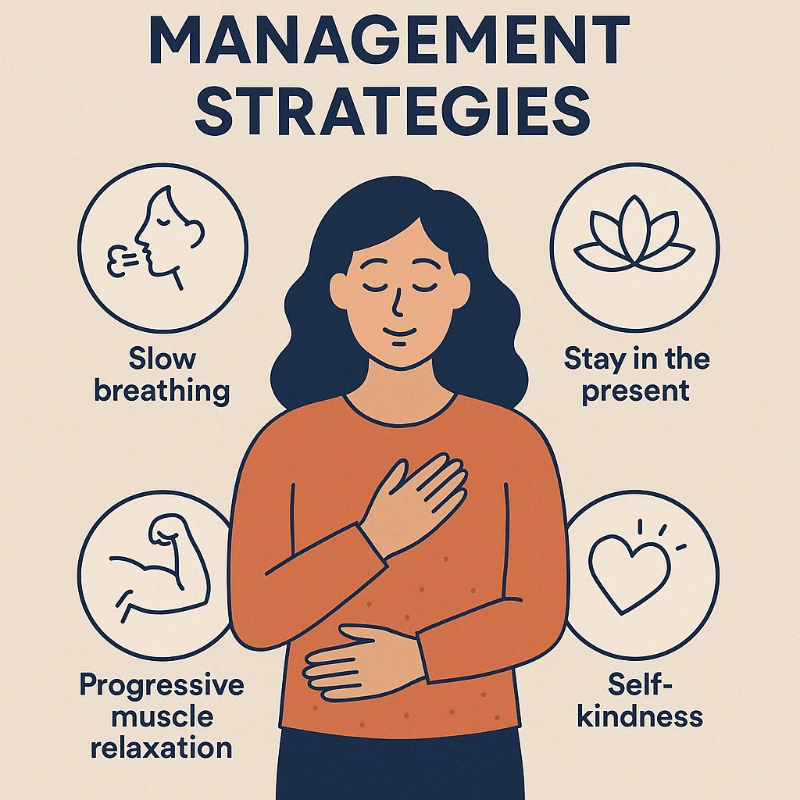
A key focus was stress regulation and body-based coping strategies. He had developed physical tension, shallow breathing, and insomnia as a result of chronic anxiety. Through grounding exercises, controlled breathing, and progressive muscle relaxation, he learned to calm his nervous system before and during stressful tasks. This not only improved his focus but also reduced the intensity of his anxious responses, allowing him to approach work and exams with greater clarity and composure.
Over a couple of months, he reported a significant reduction in anticipatory anxiety. He was able to prepare for exams and manage high-pressure work situations without becoming overwhelmed. Mistakes no longer triggered catastrophic self-judgment, and he developed a more realistic and compassionate internal dialogue. He noticed improvements in concentration, sleep, and overall confidence, allowing him to engage fully in professional and personal pursuits.
By the conclusion of therapy, he described a newfound sense of balance and resilience in the face of performance pressure. He could approach tasks with focus and intention, acknowledge his efforts without harsh self-criticism, and maintain perspective when challenges arose. CBT had enabled him to identify, challenge, and reframe unhelpful thinking patterns while developing practical coping strategies to manage both cognitive and physiological aspects of anxiety.
This case illustrates how Cognitive Behavioural Therapy can effectively support clients experiencing work or exam-related anxiety. By combining cognitive restructuring, behavioural exposure, and stress-regulation techniques, clients can reduce performance pressure, build confidence, and develop sustainable strategies for managing anxiety in high-stakes situations.