Relationship Rebuild & Communication Support
Service Type(s):
- Couples Counselling
- Communication Coaching
- Conflict Resolution Support
Service(s) Delivered:
- Joint Intake Session + Individual Check-ins (as needed)
- 8-Session Couples Program
- Communication Frameworks & Take-Home Exercises
This case involves a man in his mid-30s who sought therapy after noticing increasing anxiety in social and professional situations. Although successful in his career, he found himself withdrawing from team meetings, avoiding public speaking, and feeling on edge in group settings. He described a constant inner tension and fear of being judged or making mistakes. Over time, his world had become smaller as he limited himself to only those situations where he felt “safe.” He came to therapy not only because the anxiety was limiting his opportunities, but because he felt disconnected from others and from his own sense of ease.
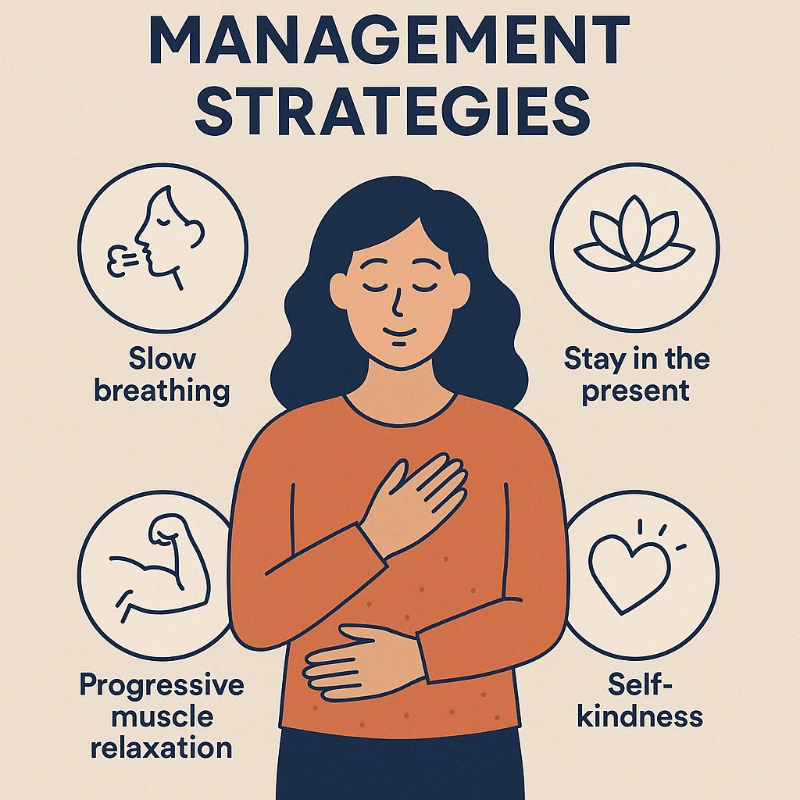
In the early sessions, we explored how his anxiety manifested in both his mind and body. He reported shallow breathing, a tight chest, and a tendency to freeze or mentally “check out” when attention was directed toward him. Together, we identified these as physiological signs of a threat response, his nervous system reacting as though he were in danger. Using grounding and Somatic Psychotherapy, he began to recognise when his body was shifting into anxiety and to gently bring himself back into the present moment.
As trust developed, we explored the origins of his fear of judgment. He recalled early experiences of being criticised by a parent who had high expectations and little tolerance for mistakes. As a child, he learned to stay quiet and avoid standing out to prevent negative attention. This pattern had persisted into adulthood, where he equated visibility with vulnerability. Understanding this early conditioning allowed him to approach his anxiety with greater compassion rather than shame.
A key focus of therapy was helping him move from avoidance toward engagement. We introduced gradual exposure exercises, first in imagination, then in small real-life situations, to help retrain his nervous system. For instance, he practiced speaking up in low-stakes meetings, observing his physical sensations, and using breath and grounding techniques to stay connected to his body. Each time he did this, he reinforced a new experience of safety while being seen and heard.
Alongside this, we explored the critical inner voice that drove his self-consciousness. Through cognitive and experiential work, he learned to challenge unrealistic standards and develop a more balanced inner dialogue. Instead of “I must be perfect or I’ll look foolish,” he began to replace it with “It’s okay to be real and human.” This shift reduced the intensity of his anticipatory anxiety and allowed him to approach social situations with curiosity rather than fear.
As therapy progressed, he started to notice genuine changes. He felt more confident expressing his ideas and began reconnecting socially, attending gatherings he once avoided. His body no longer defaulted to rigidity and tension; instead, he could recognise his triggers and regulate himself through breath, grounding, and awareness.
By the later stages of therapy, he described feeling “present in my own skin” and able to engage more naturally with others. He reported that conversations flowed more easily, and he was able to tolerate uncertainty and even enjoy moments of spontaneity. His world felt more open again, marked by authentic connection, not guarded performance.
This case highlights how anxiety counselling can help clients move beyond avoidance and rediscover confidence through body-mind integration. By addressing both the cognitive and somatic roots of anxiety, individuals can shift from patterns of self-protection toward connection, authenticity, and self-trust.