Relationship Rebuild & Communication Support


Service Type(s):

  • Couples Counselling
  • Communication Coaching
  • Conflict Resolution Support

Service(s) Delivered:

  • Joint Intake Session + Individual Check-ins (as needed)
  • 8-Session Couples Program
  • Communication Frameworks & Take-Home Exercises

This case involves a woman in her early 40s who sought therapy after experiencing recurring panic attacks and an ongoing fear of losing control. Although she was a happy wife and mother to 2 young children, she described sudden waves of intense fear, accompanied by racing heart, shortness of breath, dizziness, and an overwhelming sense that something catastrophic was about to happen. These episodes left her feeling helpless and hypervigilant, and over time she began avoiding situations that she perceived might trigger panic attacks, including crowded spaces and social events. She sought therapy to reclaim a sense of stability, safety, and confidence in her daily life.

In the initial sessions, we explored how her panic episodes were linked to both physical sensations and cognitive interpretations. She described a “tightness” in her chest that escalated to breathlessness and racing thoughts, often accompanied by the belief that she was about to lose control or faint. Somatic Psychotherapy helped her understand that these were natural nervous system responses to perceived threat, not signs of impending disaster. Recognising this was the first step in reducing the fear and shame that amplified her panic.

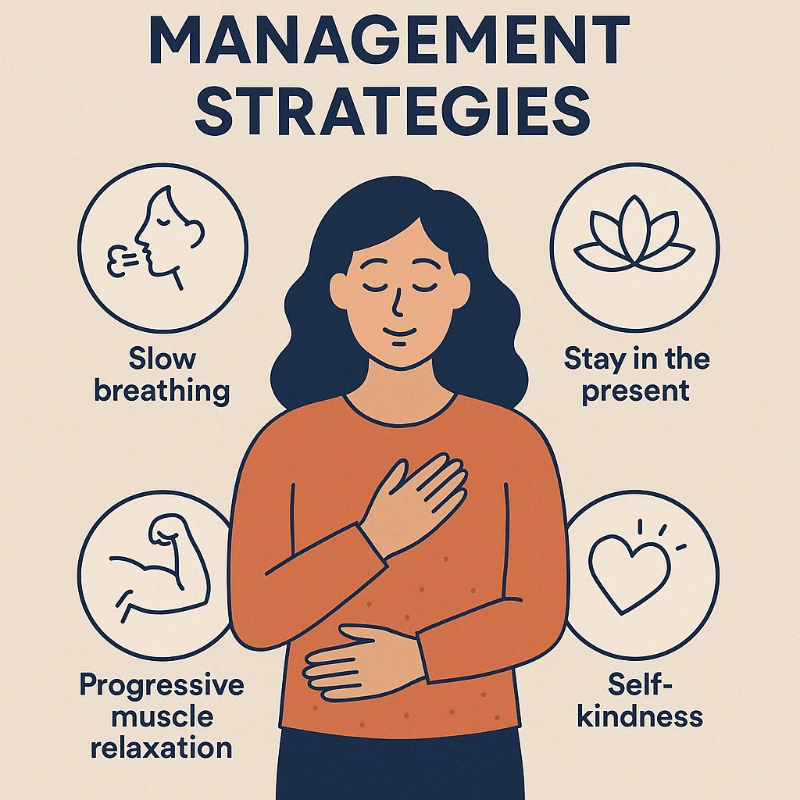
Therapy began with regulation of her nervous system. Using grounding techniques, controlled breathing, and gentle body awareness exercises, she learned to notice the early warning signs of panic and intervene before the response escalated. Grounding exercises helped her release tension held in the chest, shoulders, and abdomen, allowing her body to experience calm instead of constant hyperarousal.

Alongside somatic work, we explored the cognitive and emotional patterns underlying her fear. She traced the origins of her panic to early experiences of unpredictability and high stress in her family, where moments of emotional intensity were often overwhelming and unresolved. These early experiences had left her with a heightened sensitivity to internal and external triggers, reinforcing a belief that the world was unsafe and that she could not trust her own ability to cope.

Using a combination of exposure-based and cognitive strategies, she gradually faced situations she had been avoiding. Beginning with low-risk contexts, she practised observing bodily sensations without judgment, using grounding and breath to remain present, and challenging catastrophic thoughts. Over time, she progressed to more challenging scenarios, including public speaking and social gatherings, integrating her skills in real-world settings.

A key aspect of therapy involved fostering self-compassion and emotional tolerance. She learned to treat herself kindly during moments of distress, recognising that panic responses were adaptive attempts by her nervous system to protect her, rather than failures. This shift allowed her to respond to fear with curiosity rather than avoidance.

By the later stages of therapy, she reported a significant reduction in the frequency and intensity of panic episodes. She regained confidence in situations she previously avoided, felt more present and grounded, and noticed an increased ability to regulate her nervous system independently. Importantly, she no longer interpreted bodily sensations as dangerous, and her life became more expansive and less constrained by fear.

This case illustrates how Anxiety Counselling can help clients restore balance and reclaim a sense of control in the face of panic. By combining Somatic Psychotherapy and cognitive awareness, clients can learn to navigate fear safely, strengthen resilience, and rebuild confidence in themselves and their daily lives.

Get in touch with us

Please complete your details below and we will reply to you as soon as possible.