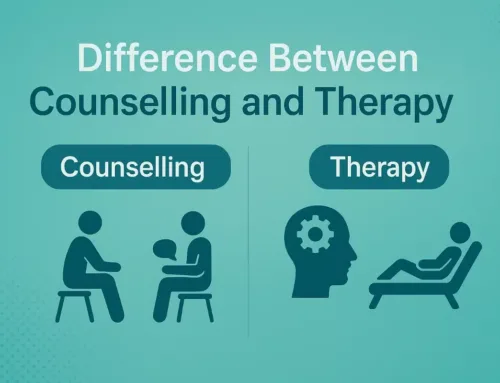
Counselling is a form of talk therapy where you meet a trained counsellor to work through personal issues, mental health difficulties and life transitions in a safe and confidential environment.

The formal definition is worth reading closely. The Psychotherapy and Counselling Federation of Australia describes professional counselling as “a safe and confidential collaboration between qualified counsellors and clients to promote mental health and wellbeing, enhance self-understanding, and resolve identified concerns”.

Counselling exists to enhance self understanding, and building that is usually what gets people to their desired outcome rather than any particular technique.

Counsellors And Counselling

Two related things get confused, so it helps to separate the person from the process.

What Is A Counsellor?

A trained professional counsellor provides counselling sessions to people dealing with anxiety, stress, relationship problems and other personal challenges. Most belong to a professional body such as the Australian Counselling Association or PACFA, which sets standards for formal training, ethical practice and ongoing professional development. A registered counsellor with either body is accountable to a complaints process.

What Is Professional Counselling?

Professional counselling is a confidential collaboration where you and the counsellor are both active participants. Together you explore options, develop strategies and resolve identified concerns. The wider definition adds that it empowers diverse individuals to accomplish mental health goals of their own choosing, which matters because no two people arrive with the same background. It is not advice giving, and a counsellor who tells you what to do in session two is usually guessing.

How Counselling Helps

Counselling can help whether your difficulty arrived last month or has been running for twenty years.

Benefits Of Counselling

Counselling reduces anxiety and stress, improves relationships and builds self awareness, which is the quiet one people underrate. Most of us cannot see our own patterns because we are standing inside them. Counselling gives you a second perspective from someone with no stake in which decision you make, and new perspectives are often what unlock a problem that has not moved in years.

What Problems Can Counselling Help With?

People seek counselling to address issues including depression, anxiety, grief and loss, trauma, domestic violence, family conflict, workplace stress, substance abuse, low self esteem and career goals. It also suits people with no diagnosable mental illness at all who simply know something is not right and want some mental health support.

Scale matters here. The Australian Bureau of Statistics found that 21.5 per cent of Australians aged 16 to 85, around 4.3 million people, experienced a mental disorder in a twelve month period, and 42.9 per cent will at some point in their lives. Early intervention is far easier than repair.

How Counselling Works In Practice

Counselling is more structured than it looks from the outside.

The Counselling Process

The first counselling session covers why you are here, how you feel and what you want to change. Your counsellor listens, asks questions and starts to understand your concerns, and by the end you should have agreed on a rough direction. From there, regular sessions build on each other. Between sessions you may test something small in daily life and bring back what happened, which is where much of the progress actually occurs.

What Sort Of Treatment Does A Counsellor Provide?

The counselling counsellors provide depends on their training, and most work across several types. Cognitive behavioural therapy identifies and restructures distorted thinking. Psychodynamic work explores how early experience shapes current behaviour. Humanistic and person centred approaches provide a non judgemental space for growth. Mindfulness based therapy adds meditative practice.

Our own work is somatic, drawing on Integrative Body Mind Psychotherapy, because the body holds patterns that talking about them does not always reach.

Is Counselling Confidential?

In Australia, counselling is confidential. What you say stays in the room, with narrow exceptions where there is a legal requirement to act, such as immediate danger to you or someone else, concerns about a child’s safety, or a court order.

Your counsellor should explain those limits plainly in the first session. If nobody raises confidentiality with you, ask.

Practical Considerations

A few things are worth sorting out before you book rather than after.

How Much Does Counselling Cost?

Counselling fees vary between services and reflect training, experience and setting. Private practice generally costs more than community health centres, which often run low cost or subsidised services. Some private health insurance extras cover counselling with practitioners registered to a specific body, so check with your fund rather than assuming. Ask about fees on the first phone call.

Can Counselling Be Done Online?

Yes. Many qualified counsellors provide counselling online as well as in person, and for most concerns the outcomes are comparable. Online removes travel and suits people in regional areas or on shift rosters. In person tends to suit trauma work better, particularly where the body is part of the picture.

Do You Need A Counsellor?

Consider it if stress or anxiety is affecting daily life, if the same personal issues keep returning, if a life transition has knocked you sideways, or if talking to friends and family members is no longer enough. You do not need a diagnosis and you do not need to be in crisis.

Choosing A Counsellor

Fit matters more than credentials, though both count.

What Type Of Counsellor Is Right For You?

Some counsellors work in a particular area such as trauma, addiction, relationships or family practice, while others work broadly across mental health and wellbeing. If your concern is specific, someone with depth in it will save you time. If you are not sure what the problem is, a generalist is a reasonable place to start.

Skills And Qualifications To Look For

Look for formal training in counselling or psychotherapy, membership of a recognised professional body, ongoing professional development and supervision. Ask directly what they studied and how long they have practised. Anyone worth seeing answers without hesitation.

How Can You Find A Counsellor?

The ACA and PACFA both maintain searchable directories, which filters out anyone with no accountability. You can also search for counselling services near where you live or work, or ask your GP. Condition specific organisations, such as an anxiety disorders association, often keep referral lists too.

Other Professionals Who Provide Counselling

Counsellors are not the only ones doing this work.

Psychologists, social workers, mental health nurses, psychotherapists and other health professionals all provide counselling, with different training and different scopes. Psychologists can formally diagnose and attract Medicare rebates. Counsellors and psychotherapists cannot, and none of these health professionals prescribe medication, which sits with doctors. Good practitioners refer to other healthcare professionals when something falls outside what they do.

What This Looks Like In Practice

These are composite examples drawn from our clinical work, with identifying details changed.

A man in his thirties booked in for work stress and finished after five sessions with a plan he had written himself. Not everything needs long term work, and a few sessions is a legitimate outcome rather than a failure to commit.

A woman in her fifties said she did not have anything wrong enough to justify being there. She had been managing a chronically unwell partner for six years and nobody had asked how she was. She needed a room with no agenda more than she needed strategies.

A couple came in over one recurring argument. Two sessions in it was clear the argument was standing in for something neither had said out loud. Naming that took the heat out of the fight itself.

Frequently Asked Questions

The questions people ask us most often before booking, and our honest answers.

How Long Does Counselling Take?

Some people come for a few sessions, others stay longer to work through deeper concerns. It depends on your goals and what you are dealing with. A counsellor should give you a realistic sense after the first two or three.

What If You Are Nervous About The First Session?

Almost everyone is, and counsellors expect it. You do not have to arrive with a prepared speech. Saying you are not sure where to start is a perfectly good opening, and a good counsellor takes it from there.

Can You Stop If It Does Not Suit You?

Yes, at any time. It helps to say so in a session rather than quietly disappearing, because that conversation often clarifies what you actually want. If the fit is wrong, trying a different counsellor is normal.

Do Counsellors Diagnose Mental Health Conditions?

No. Formal diagnosis sits with psychologists, psychiatrists and doctors. Counsellors work with what you bring and refer on when a diagnosis is needed.

Getting Started

Counselling is not a mysterious process. It is a professional relationship with a trained person whose only job in that hour is to help you understand what is happening and decide what to do about it. Problem solving is part of it, and so is simply being heard properly, which is rarer than it should be.

If you are struggling right now, call Lifeline on 13 11 14 or Beyond Blue on 1300 22 4636, and call 000 if there is immediate danger.

If you are ready to talk, we provide counselling in Perth and online, working with adults, couples and families. No referral or mental health care plan is needed.

Book a session with us or call us to ask anything before you commit.

About the Author: Helena Boyd

Helena Boyd is an experienced counsellor and psychotherapist based in Australia. Helena specialises in anxiety, depression, and relationship counselling, helping hundreds of clients navigate these challenges effectively.

Topics

Reach Out To Our Friendly Team Today

    Topics

    Reach Out To Our Friendly Team Today

      Counselling is a form of talk therapy where you meet a trained counsellor to work through personal issues, mental health difficulties and life transitions in a safe and confidential environment.

      The formal definition is worth reading closely. The Psychotherapy and Counselling Federation of Australia describes professional counselling as “a safe and confidential collaboration between qualified counsellors and clients to promote mental health and wellbeing, enhance self-understanding, and resolve identified concerns”.

      Counselling exists to enhance self understanding, and building that is usually what gets people to their desired outcome rather than any particular technique.

      Counsellors And Counselling

      Two related things get confused, so it helps to separate the person from the process.

      What Is A Counsellor?

      A trained professional counsellor provides counselling sessions to people dealing with anxiety, stress, relationship problems and other personal challenges. Most belong to a professional body such as the Australian Counselling Association or PACFA, which sets standards for formal training, ethical practice and ongoing professional development. A registered counsellor with either body is accountable to a complaints process.

      What Is Professional Counselling?

      Professional counselling is a confidential collaboration where you and the counsellor are both active participants. Together you explore options, develop strategies and resolve identified concerns. The wider definition adds that it empowers diverse individuals to accomplish mental health goals of their own choosing, which matters because no two people arrive with the same background. It is not advice giving, and a counsellor who tells you what to do in session two is usually guessing.

      How Counselling Helps

      Counselling can help whether your difficulty arrived last month or has been running for twenty years.

      Benefits Of Counselling

      Counselling reduces anxiety and stress, improves relationships and builds self awareness, which is the quiet one people underrate. Most of us cannot see our own patterns because we are standing inside them. Counselling gives you a second perspective from someone with no stake in which decision you make, and new perspectives are often what unlock a problem that has not moved in years.

      What Problems Can Counselling Help With?

      People seek counselling to address issues including depression, anxiety, grief and loss, trauma, domestic violence, family conflict, workplace stress, substance abuse, low self esteem and career goals. It also suits people with no diagnosable mental illness at all who simply know something is not right and want some mental health support.

      Scale matters here. The Australian Bureau of Statistics found that 21.5 per cent of Australians aged 16 to 85, around 4.3 million people, experienced a mental disorder in a twelve month period, and 42.9 per cent will at some point in their lives. Early intervention is far easier than repair.

      How Counselling Works In Practice

      Counselling is more structured than it looks from the outside.

      The Counselling Process

      The first counselling session covers why you are here, how you feel and what you want to change. Your counsellor listens, asks questions and starts to understand your concerns, and by the end you should have agreed on a rough direction. From there, regular sessions build on each other. Between sessions you may test something small in daily life and bring back what happened, which is where much of the progress actually occurs.

      What Sort Of Treatment Does A Counsellor Provide?

      The counselling counsellors provide depends on their training, and most work across several types. Cognitive behavioural therapy identifies and restructures distorted thinking. Psychodynamic work explores how early experience shapes current behaviour. Humanistic and person centred approaches provide a non judgemental space for growth. Mindfulness based therapy adds meditative practice.

      Our own work is somatic, drawing on Integrative Body Mind Psychotherapy, because the body holds patterns that talking about them does not always reach.

      Is Counselling Confidential?

      In Australia, counselling is confidential. What you say stays in the room, with narrow exceptions where there is a legal requirement to act, such as immediate danger to you or someone else, concerns about a child’s safety, or a court order.

      Your counsellor should explain those limits plainly in the first session. If nobody raises confidentiality with you, ask.

      Practical Considerations

      A few things are worth sorting out before you book rather than after.

      How Much Does Counselling Cost?

      Counselling fees vary between services and reflect training, experience and setting. Private practice generally costs more than community health centres, which often run low cost or subsidised services. Some private health insurance extras cover counselling with practitioners registered to a specific body, so check with your fund rather than assuming. Ask about fees on the first phone call.

      Can Counselling Be Done Online?

      Yes. Many qualified counsellors provide counselling online as well as in person, and for most concerns the outcomes are comparable. Online removes travel and suits people in regional areas or on shift rosters. In person tends to suit trauma work better, particularly where the body is part of the picture.

      Do You Need A Counsellor?

      Consider it if stress or anxiety is affecting daily life, if the same personal issues keep returning, if a life transition has knocked you sideways, or if talking to friends and family members is no longer enough. You do not need a diagnosis and you do not need to be in crisis.

      Choosing A Counsellor

      Fit matters more than credentials, though both count.

      What Type Of Counsellor Is Right For You?

      Some counsellors work in a particular area such as trauma, addiction, relationships or family practice, while others work broadly across mental health and wellbeing. If your concern is specific, someone with depth in it will save you time. If you are not sure what the problem is, a generalist is a reasonable place to start.

      Skills And Qualifications To Look For

      Look for formal training in counselling or psychotherapy, membership of a recognised professional body, ongoing professional development and supervision. Ask directly what they studied and how long they have practised. Anyone worth seeing answers without hesitation.

      How Can You Find A Counsellor?

      The ACA and PACFA both maintain searchable directories, which filters out anyone with no accountability. You can also search for counselling services near where you live or work, or ask your GP. Condition specific organisations, such as an anxiety disorders association, often keep referral lists too.

      Other Professionals Who Provide Counselling

      Counsellors are not the only ones doing this work.

      Psychologists, social workers, mental health nurses, psychotherapists and other health professionals all provide counselling, with different training and different scopes. Psychologists can formally diagnose and attract Medicare rebates. Counsellors and psychotherapists cannot, and none of these health professionals prescribe medication, which sits with doctors. Good practitioners refer to other healthcare professionals when something falls outside what they do.

      What This Looks Like In Practice

      These are composite examples drawn from our clinical work, with identifying details changed.

      A man in his thirties booked in for work stress and finished after five sessions with a plan he had written himself. Not everything needs long term work, and a few sessions is a legitimate outcome rather than a failure to commit.

      A woman in her fifties said she did not have anything wrong enough to justify being there. She had been managing a chronically unwell partner for six years and nobody had asked how she was. She needed a room with no agenda more than she needed strategies.

      A couple came in over one recurring argument. Two sessions in it was clear the argument was standing in for something neither had said out loud. Naming that took the heat out of the fight itself.

      Frequently Asked Questions

      The questions people ask us most often before booking, and our honest answers.

      How Long Does Counselling Take?

      Some people come for a few sessions, others stay longer to work through deeper concerns. It depends on your goals and what you are dealing with. A counsellor should give you a realistic sense after the first two or three.

      What If You Are Nervous About The First Session?

      Almost everyone is, and counsellors expect it. You do not have to arrive with a prepared speech. Saying you are not sure where to start is a perfectly good opening, and a good counsellor takes it from there.

      Can You Stop If It Does Not Suit You?

      Yes, at any time. It helps to say so in a session rather than quietly disappearing, because that conversation often clarifies what you actually want. If the fit is wrong, trying a different counsellor is normal.

      Do Counsellors Diagnose Mental Health Conditions?

      No. Formal diagnosis sits with psychologists, psychiatrists and doctors. Counsellors work with what you bring and refer on when a diagnosis is needed.

      Getting Started

      Counselling is not a mysterious process. It is a professional relationship with a trained person whose only job in that hour is to help you understand what is happening and decide what to do about it. Problem solving is part of it, and so is simply being heard properly, which is rarer than it should be.

      If you are struggling right now, call Lifeline on 13 11 14 or Beyond Blue on 1300 22 4636, and call 000 if there is immediate danger.

      If you are ready to talk, we provide counselling in Perth and online, working with adults, couples and families. No referral or mental health care plan is needed.

      Book a session with us or call us to ask anything before you commit.

      About the Author

      Posted by
      Helena Boyd is an experienced counsellor and psychotherapist based in Australia. Helena specialises in anxiety, depression, and relationship counselling, helping hundreds of clients navigate these challenges effectively.

      Fees And Rebates

      We offer cost-effective solutions that can fit within your budget. The insights and skills acquired in therapy can continue to positively impact mental and emotional health long after the therapy sessions have ended, making it a truly worthwhile investment in yourself.

      GP Resources

      We value collaboration with GPs and other healthcare professionals in delivering holistic healthcare. This enhances the quality of care delivered to clients.

      Bulk Billing

      Typically this is more commonly associated with general practitioners (GPs) than psychologists or counsellors. As we are psychotherapists, we do not offer this service.

      Private Health

      Our services do not require a GP referral but cannot be claimed through a private health fund. Our fees are often equal to or less than the standard gap payment.

      Medicare

      Medicare and Mental Health Care Plan rebates are not available at our practice. However, we strive to keep our therapy affordable and accessible to clients.